Ask Understand what "true knowledge" means to the youth & young adult (YAYA) market.Help marketers better understand the Youth & Young Adult (YAYA) market by exploring how they define true knowledge, navigate technology and education, and make decisions in an increasingly digital world. To answer this question, our team designed and launched MOJO Ad's 2026 State of the YAYA research study, surveying 800 young adults across the United States.
my roleLead quantitative research, survey development, data analysis, insight generation and strategic storytelling for Team Parallax as a part of MOJO Ad's annual State of the YAYA report.
methodologyI helped design a 52-question nationwide survey created on Qualtrics and distributed through Prolific, resulting in 800 completed responses representative of the U.S. Census Bureau's 18–24-year-old population across race, ethnicity and gender. We paired this with nine focus groups, 30 in-depth interviews and extensive secondary research to uncover how young adults think about education, technology and lived experience.
Rather than validating existing assumptions, our research uncovered behaviors that challenged long-held stereotypes about Generation Z and provided marketers with actionable insights for connecting with this audience.
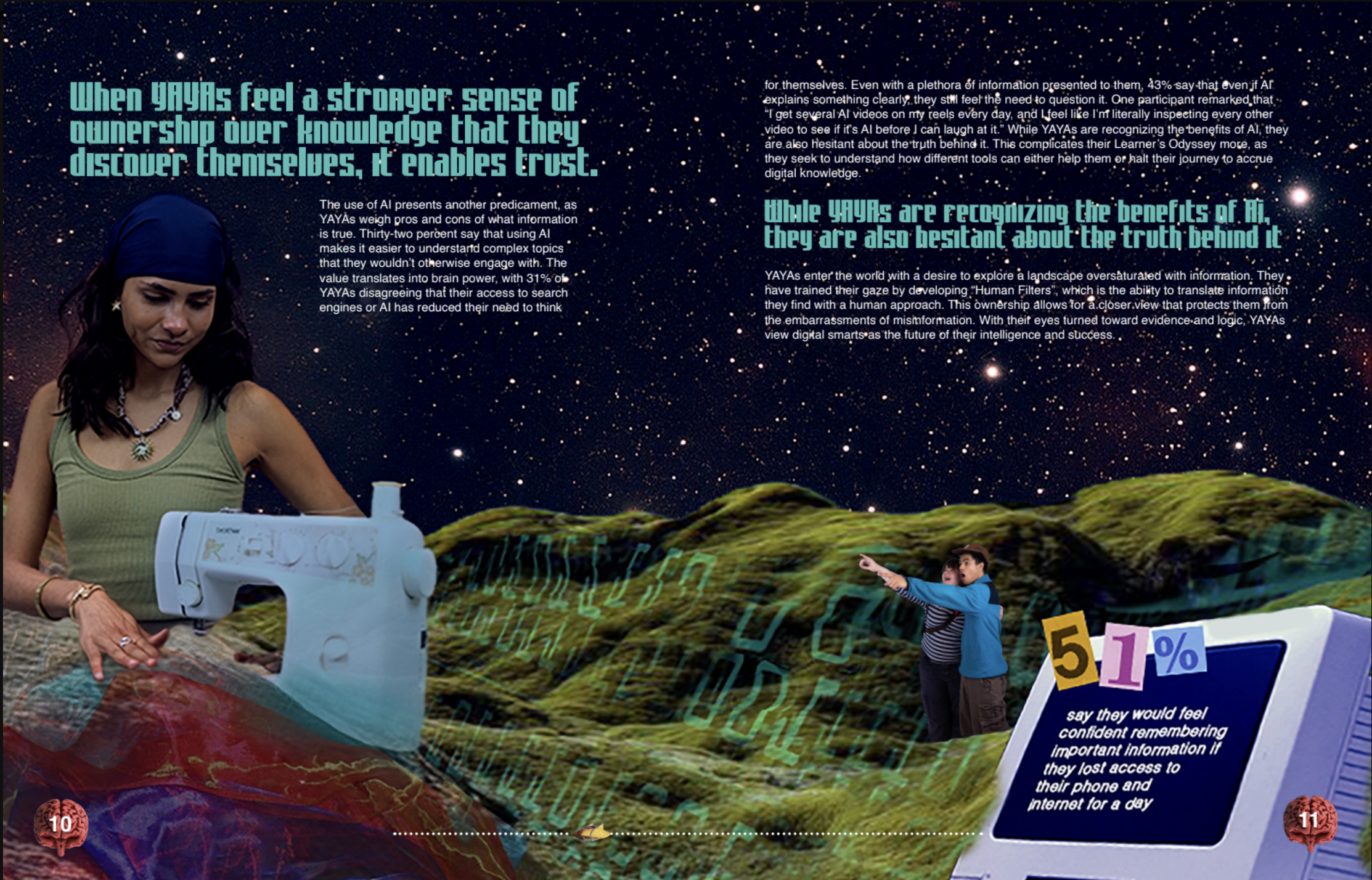
human truthYoung adults aren't overwhelmed because they lack knowledge—they're overwhelmed by an abundance of it. Rather than accepting information at face value, they actively filter, verify and combine learning from formal education, technology and lived experience to determine what they believe is true.
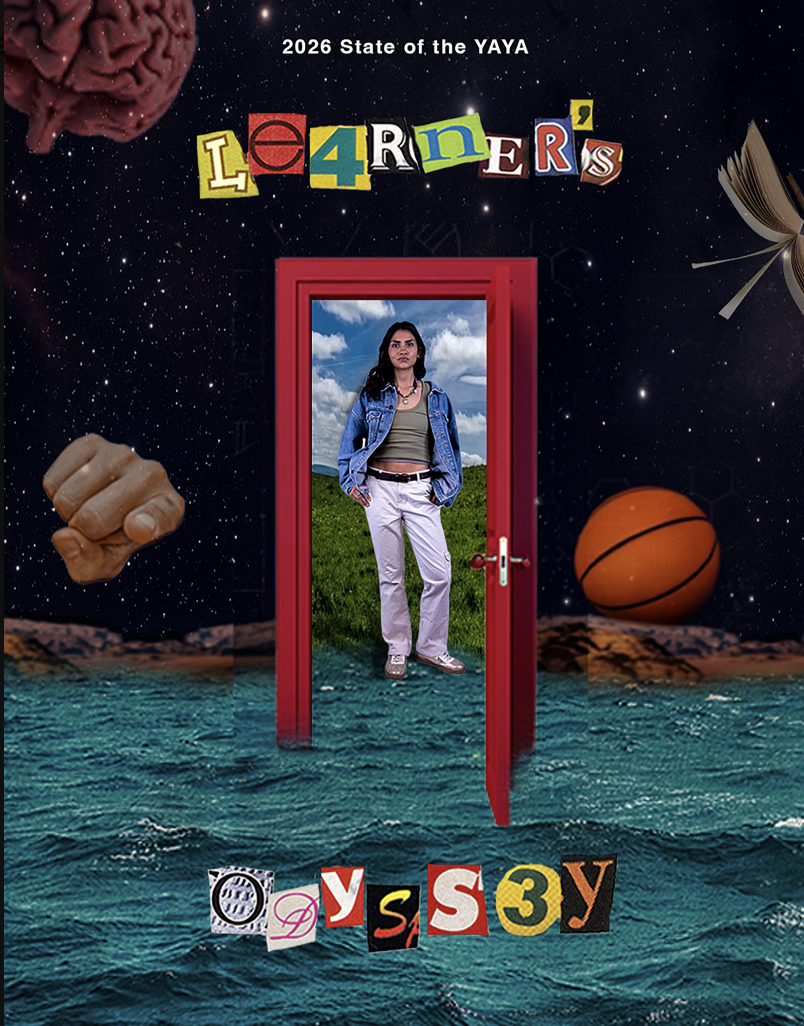
The Framework: The Learner's Odyssey
Our research revealed that YAYAs don't rely on a single source of knowledge. Instead, they move through what we called The Learner's Odyssey—a journey across three interconnected worlds:
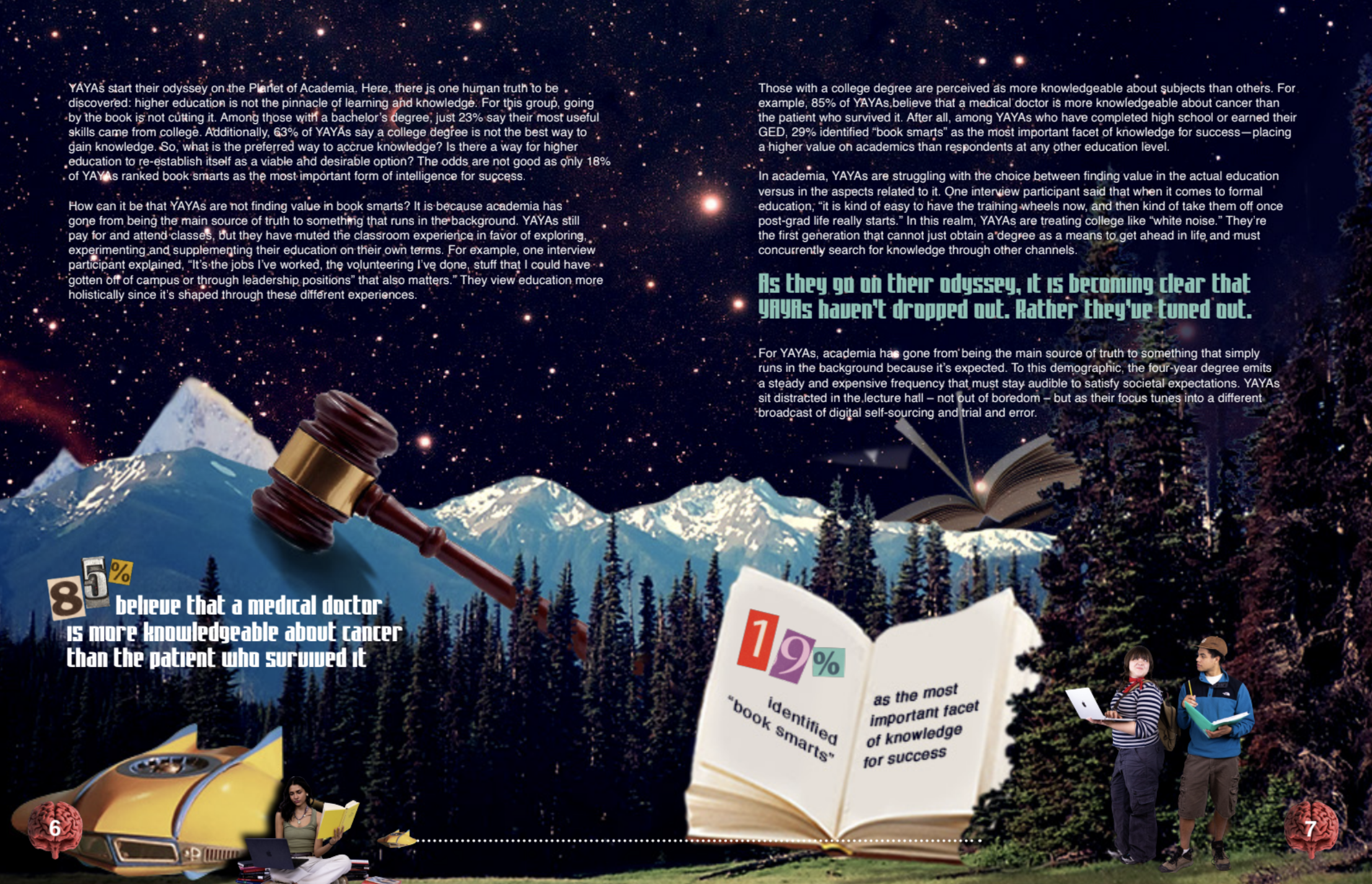
Academia, where credentials provide legitimacy but not necessarily the most valuable learning.
Technology, where digital tools expand thinking rather than replace it.
Lived Experience, where real-world application transforms information into wisdom.
This framework became the foundation of our team’s 2026 State of the YAYA report.
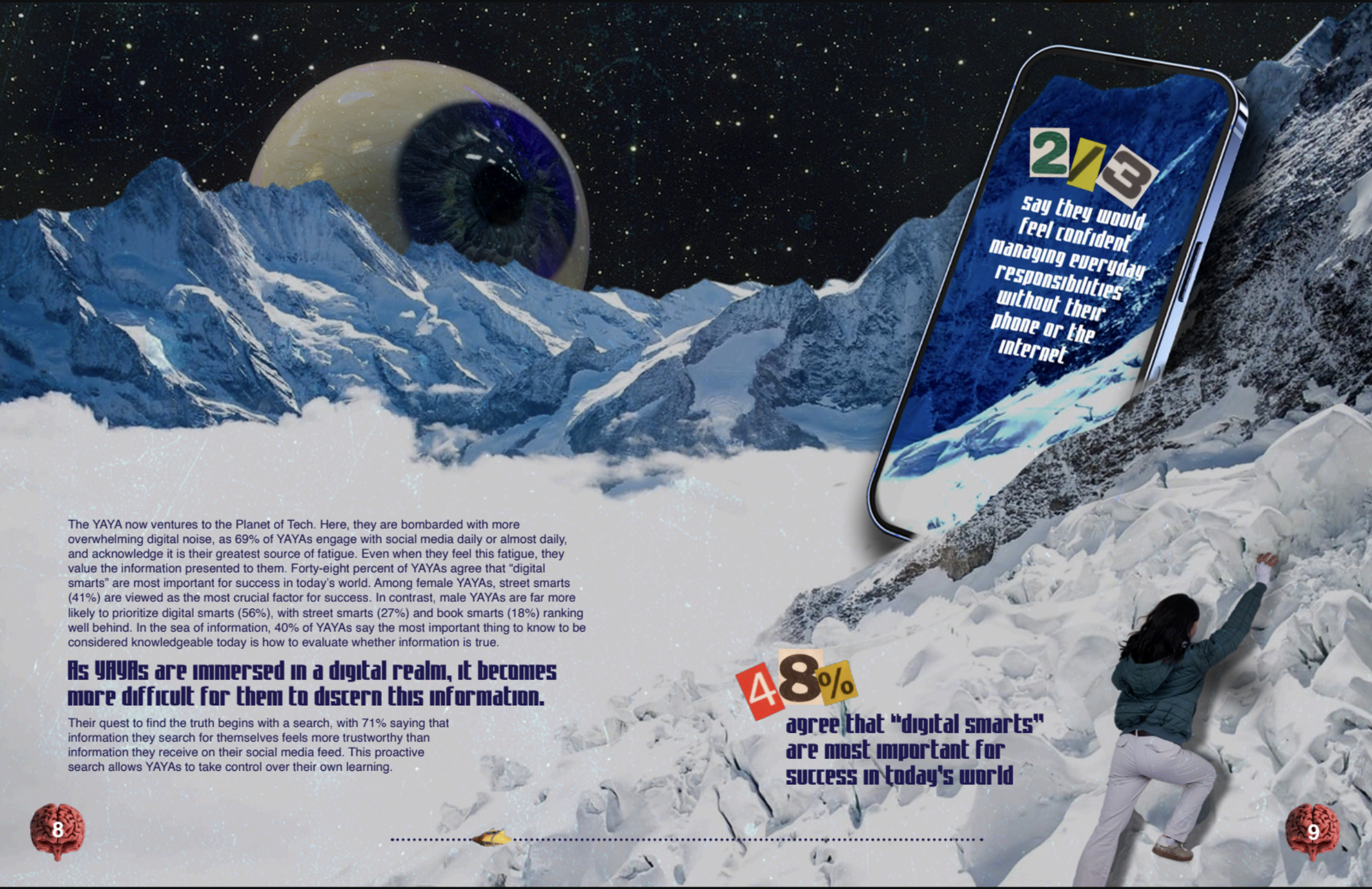
Key Finding: yayas aren't addicted - they're optimized.One of our most exciting discoveries challenged one of the biggest stereotypes surrounding young adults.
While 59% of YAYAs described their phone as a "second brain" that allows them to focus on thinking rather than remembering, they showed far more independence than expected:
67% felt confident handling everyday responsibilities without their phone.
63% trusted their own judgment without checking their phone first.
51% believed they could remember important information without their phone.
47% believed they could stay calm and not anxious without access to their phones or the internet.
Rather than creating dependence, technology functions as an optimization tool that frees mental bandwidth while allowing young adults to remain confident in their own abilities.
Final ImpactThe 2026 State of the YAYA report equipped brands with a research-backed understanding of one of today's most influential consumer segments. By challenging assumptions around technology, education and learning, our findings gave marketers a more accurate picture of how young adults build trust, evaluate information and form lasting relationships with brands.
The report continues to serve as a strategic resource for organizations seeking to create more relevant messaging, stronger consumer insights and more meaningful connections with the YAYA market.
View our planbook here to experience the Learner’s Odyssey and see our full 2026 State of the YAYA Report.
Key Finding: The Most Important Lessons Don't Come with a ManualFor YAYAs, the most important lessons don't come with a manual—they come with a mistake. While they have unprecedented access to information, our research revealed that they believe competence, critical thinking and confidence are built through lived experience rather than simply consuming knowledge.
50% believe you truly know something only when you can teach it to someone else.
46% say their most valuable skills came from trial and error in life, rising to 50% among those with a high school diploma or GED.
37% say that when learning something new, what matters most is how well they can apply it in real life.
74% say learning outside of school or work helps them better understand themselves.
For marketers, this means expertise alone is no longer enough. Brands resonate most when they move beyond simply informing consumers and instead empower them to learn, experiment and gain confidence through real-world experience.